Re-Watching the Classics: Harper

Harper is a neo noir from 1966 directed by Jack Smight. When a producer asked writer William Goldman to find him a script with a harder edge, Goldman recommended Ross Macdonald’s Archer books. He was asked to write a screenplay and choice the first book in the series “The Moving Target.”

This movie was Goldman’s first solo screenplay writing credit and started the career of one of the greatest screenwriters in history.

So why is this movie called “Harper” and not “The Moving Target” or “Archer”? Well I have found three possibilities for this change of title in my research. I will call these theories since I do not know which one is right. One is Paul Newman wanted the name change to continue his streak of hits starting with H, including The Hustler and Hud, Hombre would come out a year later. The second theory is the film rights were for the story only and the rights to the Lew Archer name was not included in the deal. The third is the Macdonald estate was not pleased with the idea of a film and would not allow the use of the Archer name. Hard to say what really happened here, but I suspect theory two or three is true and they named it Harper because of theory one.

Either way, we got a throwback film in the vain of a classic film noir revolving around a private eye. This must have been an exciting film for fans of noir that didn’t really have a lot to choice from in the 1960’s. Fans of film noir also got to see some familiar faces from some of their past favorites. They got three of the best actresses from the classic film noir era making appearances in this film, Lauren Bacall, Janet Leigh, and Shelly Winters.

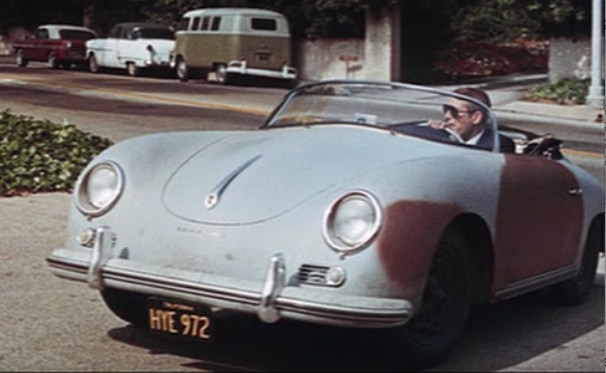
Paul Newman plays Harper as a wise cracking, tough as nails, street smart private detective, just like we like them. Harper is a little more wise than some of our detectives in the past, for instance all three of our female legends try to use their feminine ways on our hero in various ways, but all fall in the end. In fact he uses his charms on them to get what he wants more than the other way around. Harper may not have a lot of money, but he does have great taste. For instance I think his car tells much about the man. He has a Porsche, but it is a little beat up and in need of a tune-up and he has no money to do the proper repairs.
We do have a femme fatale or two in this film. Our first femme fatale is played by Pamela Tiffin who is a bit of a Lolita to Harper’s friend and the lawyer who got him this job, played by Arthur Hill.

Tiffin’s character also has a thing for pretty boy Allan Taggert, played by Robert Wagner. The thing is Taggert already has a femme fatale that is revealed later in the film.

This film is a twisted kidnapping case where Harper is hired by Bacall’s character to find her missing husband. As Harper tracks different leads, he discovers more strange characters. Will Harper find the kidnap victim before it is too late?

The first time I seen this, I was already a huge fan of Bacall and Newman and found the film good, but not great. On watching this again, I really found I enjoyed it much more. The wise cracking humor is very good and not over the top, especially Winters’ character. I think if you are a fan of hardboiled P.I.’s like Marlowe, Spade and Hammer you should give Archer…I mean Harper a try.

Favorite Tidbit: Frank Sinatra was offered the lead, but turned it down.

Review: A Wolf at the Door or O Lobo atrás da Porta

A Wolf at the Door is a film written and directed by Fernando Coimbra. This is his first full length film and I look forward to seeing more from him.

This story starts with Sylvia, played by Fabiula Nascimento, going to pick up her daughter at school. She is told by the teacher that Sylvia called earlier and her neighbor has picked up her daughter. Of course Sylvia did not call and has no idea who has picked up her daughter.

Soon Sylvia’s Husband, played by Milhem Cortaz, is brought into the police station. His mistress, played by Leandra Leal is also soon brought in for questioning. From here we get a he said, she said story. Our husband tells his story and how he has left his mistress, but she did not take it well. Then we get the mistress’ story about how she didn’t know her boyfriend was married with a family and was betrayed by her boyfriend.

Which one of these two are telling the truth? Did either one have anything to do with the kidnapping? This movie is a bit of a slow burn, but it is worth the payoff in the end. This is a he said/she said with unreliable narrators and a crazy ending. The film is from Brazil, but shows a domestic life similar to anywhere in the world, showing fears and realities of mentally unstable people and of course the dark side of affairs. Is our mistress a femme fatale or is she a victim of circumstance? This film is worth watching for fans of world cinema and neo-noir.

Review: The Curse of the Cat People

The Curse of the Cat People is the sequel of The Cat People, both produced for RKO by Val Lewton. This film is directed by Gunther von Fritsch (as Gunther V. Fritsch)  and Robert Wise. This is Wise’s first film and of course went on to direct some great films noir as well as a few classic musicals and throw in some sci-fi and horror favorites. Our three main characters are the same as the first film and we throw in a creepy little girl for an added twist.

This film was released in 1944, two years after the first film. Over this two years, our happy couple at the end of the first film has married and has a 7 to 8-year-old daughter named Amy, played by Ann Carter. If this time frame doesn’t make sense, well I think your right. Not only do we have a little girl 6 years older than possible, her father played by Kent Smith, thinks she has a little of her deceased first wife in her, someone who has died a year or so before she was born. Well who said a good film has to make total sense, especially a horror noir.

The film starts with a class of kids out playing, we soon learn Amy is a little different then the other kids. She starts to chase a butterfly and a boy helps her catch it. The boy accidentally kills the butterfly and Amy slaps the boy. Her father and mother played by Jane Randolph, meet with her teacher. When the teacher tell the parents it was nothing, only a slap. Her father is concerned with his daughter and how she is acting. The teacher reassured the couple that Amy is fine and it’s just kids being kids(Wow! how things have changed! can you imagine a girl slapping a boy in class today and the parents being worried about her actions and the teacher saying not to worry about it?)

As the film goes on Amy is alienated from the other kids more and more, but she finds a new friend in the ghost of Irene, her fathers first wife, played by Simone Simon, who has died in the first film. Things continue to get creeper and creeper from here.

Even though a lot of this film takes place during the Christmas Holiday, I think it is safe to say, this and the first film would make for a great Halloween double feature. Here is my review of the first film:

https://everythingnoir.com/2015/09/23/re-watching-the-classics-cat-people/

Review: Séance on a Wet Afternoon

Seance on a Wet Afternoon is a British Noir from 1964, written for the screen and directed by Bryan Forbes. The film is based on a book by Mark McShane. This film stars Richard Attenborough and Kim Stanley. Stanley was widely considered one of the best actresses of her time. You may not know of her or seen much of her work because she didn’t do many films. She much more preferred working live theater then working in the movie industry. She also did sporadic television work through out her career. She did love this script when she read it, but the reason she did this film is because of director Forbes’ involvement. Though she never gave any names, she once stated that if Forbes could make that dead fish look good, he could make anybody look good. Though she was only in a handful of movies in her 30 plus year career, she was nominated twice for an Academy Award for best actress, not a bad percentage. This film was one of those nominated efforts.

This film tells a story of a down and out couple, Myra and Billy. Myra is a psychic and Billy is sickly and out of work. Myra gets the idea to kidnap a rich couples’ young daughter and then have Myra “use her psychic abilities” to help find the child. This would make her séance business boom from the publicity. She talks Billy into doing all the leg work for the job, though he is very reluctant. The couple gets deeper and deeper into their own scheme as Myra continues to change the plan and outside forces continue to alter it. Will the couple get away with kidnapping or worse?

Though Stanley’s acting in this film is excellent, let us not forget about Attenborough’s performance. I actually enjoyed his performance better. His Billy is a man trapped in a marriage he can not get out of, for more than one reason. Does he do what Myra says because he has no other choice or is Myra his femme fatale who can use her charms to get him to do what she wants?

This film is worth a viewing just for these two performances. Are our main characters crazy or trapped…or maybe both?

News: Ben Affleck’s ‘Live By Night’ Starts Filming; See the First Photo From the Set

Oh, Happy Day! Ben Affleck has started shooting Live By Night today! If you haven’t read the book by Dennis Lehane I recommend you do. Here is a shot Affleck posted to his Tweeted earlier today.

Read more on the film over at Slash Film here:

http://www.slashfilm.com/ben-affleck-live-by-night-starts-filming/

Review: The Suicide Theory

The Suicide Theory is an Australian neo-noir from director Dru Brown and writer Michael Kospiah. This film revolves around our two main characters played by Steve Mouzakis and Leon Cain.

Mouzakis plays Steven Ray, a hired hit-man who is afraid to cross the street and tends to cross dress in the privacy of his apartment. Cain plays Percival, an artist who wants to die, but cannot seem to get the job done on his own.

This films opening scene starts with Ray going to the store to pick up some ice cream. He talks to the store clerk about just finding out he is soon becoming a father. When they are interrupted by a rude customer, Ray jumps the customer in the alley and pummels him with the frozen ice cream. We flash forward three years and Percival hires Ray to kill him, because after numerous attempts he has failed to kill himself. The two soon grow a close bond with each other. Coincidence and fate are discussed between the two throughout the film and is the driving force of this story.

This film has a few flashbacks that come unannounced, making it a little hard to follow at first, but if you stick with it the puzzle comes together for you. This is an interesting concept and worth viewing for neo-noir fans looking for something new to watch.

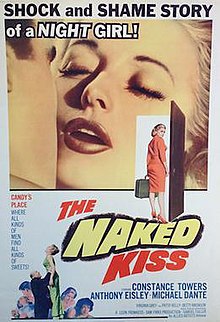
Review: The Naked Kiss

This Naked Kiss is a film noir from the noir legend Samuel Fuller. Fuller wrote and directed this film from 1964.

This film starts out with a prostitute named Kelly, played by Constance Towers, in a fight with a man. The man pulls off her wig to reveal she is completely bald! The reason she is bald in this opening scene does come up later in the film, but seems a minor point by that time. This is a shocking scene though and appears promptly on many of the posters and promotional items for the film, I’m sure it peaked some interest in the film and sold a few tickets back in 1964. After this battle with the man, Kelly takes only the money that is owed to her and leaves. The film then flashes forward a few years as Kelly gets off the bus in Grantville. She soon meets a police captain named Griff, played by Anthony Eisley. Griff soon becomes Kelly’s first customer in town and it is also her last. Griff recommends Kelly go across the river and work at an established cat house in the neighboring town. When Griff goes to the cat house to see how Kelly has settled in, he finds she is not there. Kelly has had a change of heart and soon gets a job at the local hospital for children. When Kelly meets J.L. Grant, the Grant for which the town Grantville is named, there are instant sparks and a romance soon starts.

The holes in this plot are so big that the plot doesn’t even make any sense after a while. Why does a prostitute suddenly decide to change her ways? OK, this one may be explained away as perhaps Kelly was playing the long game and using her femme fatale ways to land the most eligible bachelor. Kelly does seem to come across as bi-polar, one minute she is the nicest person you will ever meet and the next she is loosing it for some minor reason. I don’t know whether Towers is a bad actress or brilliant, I could never get a read on what Kelly’s motives are and at the end of this film I still didn’t know why she did half the stuff she did.

This film is unique and a bit campy in places, but well worth viewing for fans of classic film noir. This is not my favorite film from Fuller, but he has made it interesting enough that I’m glad I did see it.

Favorite Tidbit: Samuel Fuller put a few Easter Eggs in this film from his own noir universe. In one scene you can see Kelly walking by a theater where Fuller’s previous film Shock Corridor is on the marquee. In another scene Kelly is reading on a park bench while talking to Griff, the book she is reading is The Dark Page,a book written by Fuller.

Ysabelle Cheung on East Asian Film Noir : Transnational Encounters and Intercultural Dialogue

Ysabelle Cheung writes an excellent review of the book East Asian Film Noir: Transnational Encounters and Intercultural Dialogue. This book contains essays on films from the Far East that maybe classified as noir. It sounds like an excellent book worth checking out for fans of noir films or films from East Asia. This book will be shooting up my “to read” list if for no other reason than to find more films to watch. One of the questions this book asks is “can there be film noir from East Asia?” Well as most of you know, I find noir films from all over the world and have to say some of my favorite noir films are from East Asia and look forward to discovering even more. What are your thoughts on the subject? Here is Cheung’s full review of the book over at Los Angeles Review of Books:

https://lareviewofbooks.org/review/left-off-the-map

Review: Public Morals Season 1

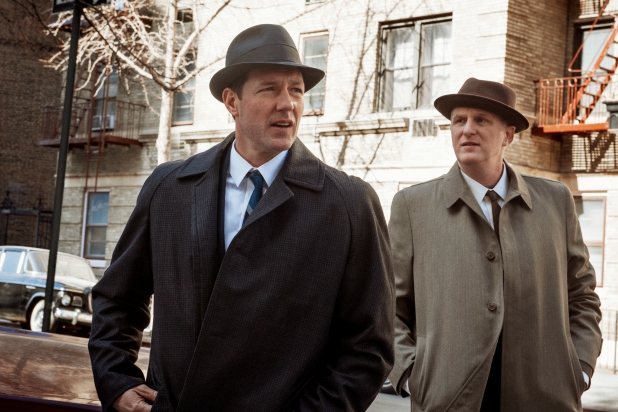
Public Morals is a new television series on TNT created and starring Edward Burns. Burns plays Terry Muldoon, a plain clothes cop who is in the Public Morals department. This department takes care of vice in 1960’s New York City, mainly in the Hell’s Kitchen neighborhood. The Muldoon family is on both sides of the law,Terry’s father played by Peter Gerety, is a retired cop while his uncle, Mr. O played by Timothy Hutton is a small time gangster. When Mr. O is shot dead at the end of the first episode, Terry does his best to find the killer and keep the peace between the police and the gangsters battling each other for control of the vice trade.

Some of my favorite characters in the series are:

Charlie Bullman: Played by Michael Rapaport, Charlie has a soft spot for beautiful prostitutes and is a single father living with his mother. Charlie has more than a passing resemblance to a young Popeye Doyle.

Christine Muldoon: Played by Elizabeth Masucci is Terry’s wife. She wants to get out of the old neighborhood and move to the suburbs to live her middle-class dreams. Terry is loyal to the old neighborhood, but wants to keep his wife happy.

Fortune: Played by Katrina Bowden, is a high-class prostitute with a heart of gold or is she the femme fatale that has not shown all her true colors yet?

Joe Patton: Played by Brian Dennehy. Patton is the Irish Mafia Godfather for New York.

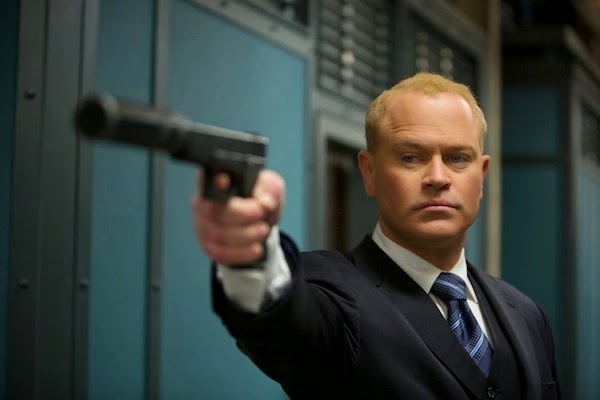
Rusty Patton: Played by Neal McDonough is Joe’s son, who is ready to take over for his father and doesn’t mind using violence to get there.

This series has many other great characters and though the series is only 10 episodes long so far, it is very complex and has some great options for story-lines for upcoming seasons.  The fine line of corrupt cops doing what they do to keep things under control and not be to corrupt is an interesting plot device. Are they really on the take to keep vice inline in the city or are they just money hungry men, not any better than the crooks they try to bust?

I really enjoyed this first season and think fans of neo-noir will enjoy it too. This one seems to have flown under the radar, but here is hoping that it gets picked up for a second season.