Kingdom Of Darkness: RKO AND FILM NOIR

I found this article today on the history of RKO and the films noir it made. It is a very interesting piece by Bill Mesce worth taking a look at. It talks about RKO’s two stars, Robert Ryan and Robert Mitchum and some of the great directors that carried the studio in the 1940’s and 1950’s. It also talks about how RKO used the noir style in some of its other genre productions like westerns and horror movies. Well worth your time to read.

Here is the link to the full article:

http://www.soundonsight.org/kingdom-of-darkness-rko-and-film-noir/

Re-Watching the Classics: Suddenly

Suddenly is a classic film noir with two of the greats. We have Frank Sinatra and Sterling Hayden in this battle of good and evil. the film is from 1954 and was written by Richard Sale and directed by Lewis Allen. Frank Sinatra got top billing for this film because he had just won the Academy Award for his performance in From Here to Eternity. I recently watched the 2 part documentary on the life of Frank Sinatra from H.B.O. Films, and I got to say, his life was interesting, and could be the basis of a good noir film! I was hoping they would bring up this film, but unfortunately I did not get any new insight on this. The reason I wanted a little more information on this is supposedly Lee Harvey Oswald watched this film only weeks before he shot John F. Kennedy. The documentary did go into depth about how close JFK and Sinatra where, but did not touch on this film. The other story, which Ben Mankiewicz told just a few weeks ago on Turner Classic Movies while talking about this film, is that Sinatra was so upset about Oswald possibly using this film as inspiration to kill his friend, he had this and The Manchurian Candidate pulled off of television play. Others say this is false and he never tried to do that. If you think Sinatra would not have enough pull as an actor/singer to do something like this, watch the documentary and find out how much pull this man had in not only the entertainment industry, but in politics as well.

This story starts out with a small glimpse into a sleepy little town in California named Suddenly. The Sheriff is Sterling Hayden who protects this little town and is well liked. He has a thing for a widow played by Nancy Gates and her son looks up to Hayden. Soon the town is a buzz with something big coming. Hayden takes charge getting ready for the Secret Service, they are coming to inspect the town because the President is coming through on his way to play golf down the road. As Hayden is helping them, three F.B.I. Agents lead by Sinatra, go to Gates’ house to make sure everything is clear for the President. Gates lives with her Father-in-Law who happened to be an Ex-Secret Service Agent. One of the current Secret Service Agents worked with the Father-in-Law and wants to personally go up to the house and say hi. Hayden takes the agent to the house and when the Secret Service Agent meets the F.B.I. Agents all hell breaks loose.

This is a really amazing little film and well worth watching. Hayden is good as always and Sinatra is brilliant as the psychopathic killer that the war created. Most of this movie takes place in a small house, but the tension blows the roof of this one. I think fans of Sinatra and Hayden will obviously enjoy this film as well as classic film noir fans. On the other hand if you don’t know why Sinatra was such a huge star, give this a watch and see how he could command a room. This would make an amazing double feature with The Manchurian Candidate.

Review: Nightmare Alley

Tyrone Power wanted this book made into a movie and he wanted to star in it. This is Nightmare Alley and though it was not a huge success on its release in 1947, it is one of Power’s best performances and has become one of his most memorable. This film is based on a book by William Lindsay Gresham and directed by Edmund Goulding. Power stars as our main character Stan Carlisle.

This film is not your normal noir, it doesn’t take place in the dark streets of some big city at first, it takes place in the country at a carnival. The film starts with Power walking through a side-show tent, and is fascinated by the geek. A geek at this time frame in the carnival is somebody that bites the heads off of chickens. He then goes into the next tent where he changes into his carnival suit and starts working with the mind reading mystic. Our mystic is actually a team played by Joan Blondell as Zeena and Ian Keith as Pete. Pete is an alcoholic and a shadow of the man he used to be. The team used to be a big draw with a system of using Pete in the crowd telling Zeena in a code how to “read the minds” of the audience. We soon meet some of the others in the carnival like Mike Mazurki as the strong man and Coleen Gray as the beautiful assistant, Molly.

Soon Pete has an accident involving Stan and some bad alcohol, and he passes in his sleep. Stan sees his chance and talks Zeena into teaching him the code. Molly helps Stan learn the code and soon Stan and Zeena are doing the old show and drawing big crowds. A romance starts between Molly and Stan and the rest of the carnival talent soon finds out. They force Stan to marry Molly and they both leave the carnival. Stan and Molly start using the code and become a big hit in the city. Stan soon meets a psychologist, played by Helen Walker, and hatches a new con to take advantage of the cities rich.

This story is a very good noir as well as a psychological thriller. The film is something to be seeing by all noir fans or classic movie lovers. I have not seen a lot of movies with Power in them, but he is quite good in this film. I also really liked Gray in this, she is the opposite of a femme fatale in this film for sure. Walker is the femme fatale in this picture, and though she doesn’t have a lot of screen time, she definitely leaves her mark on this film. I also found ex-pro wrestler Mike Mazurki’s presence as the strong man fascinating. Find this film and watch it if you have not seen it yet!

Favorite Tidbit: According to Eddie Muller when he introduced this film on TCM, grifters using the mystic con would use the phrase “Are you a friend of Stan Carlisle?” to identify each other.

Re-watching the Classics: Deadline at Dawn

Deadline at Dawn is a classic film noir from 1946 directed by Harold Clurman, the one and only film he directed. This film is based on a book by William Irish. If that name does not sound familiar it is because it is the pseudonym of Cornell Woolrich.

The film’s story starts with a meeting between a blind man and a woman, played by Lola Lane. We then find our main protagonist waking up in a news stand. Bill Williams plays our protagonist who isn’t sure where he is or how he got there. The clerk at the stand hands him a wad of cash. He doesn’t know where the cash came from, but starts looking into this mystery. He is also shipping out for World War II the next morning at 6. He goes to a dance hall and he hits it off with a dancer at the dance hall played by Susan Hayward. She feels sorry for the young man who is in the Navy just like her brother. They go to an apartment where they find a dead body of the woman who was talking to the blind man at the beginning of the film. Our protagonist who cannot remember what happened does not think he killed the woman, but would be the only suspect if the body is found. The couple decide to try to solve the murder themselves before our sailor has to ship out at 6 A.M.. Along the way a cab driver decides to help the couple, being a sucker for young love, he is played by Paul Lukas. We also meet the dead woman’s brother played by Joseph Calleia, who wants revenge for his dead sister, as well as a host of other characters found in the city that never sleeps, including a fat, drunk baseball player named “Babe” Dooley(I wonder who he is inspired by?) who finds the dead body.

This film is a pretty good classic film noir, worth your time. It is a bit hard to follow in places and maybe a bit far-fetched. It is entertaining and Susan Hayward seems to always be worth watching.

Review: The Glass Key

The Glass Key is an early classic film noir from 1942 directed by Stuart Heisler. This film is based on one of the greatest noir and hard-boiled authors ever, Dashiell Hammett.

I have not read this book yet, but it is on my long “to read” list. I have read a few things from Hammett and loved everything I’ve read so far.

This film is a very complex film, with many characters important to the story, as they all effect each other until we get to the bottom of the main crime. So I’m going to approach this a little different then I usually do. We are going to look at most of the characters and a brief description of what drives them.

Ed Beaumont played by Alan Ladd: Ed is loyal to his friend, Paul Madvig, even though he knows sometimes this is not the best thing to be. He is also fascinated by our femme fatale for this tale Janet Henry. Ed is a smart man with many connections in the political world as well as the criminal world and bonces from one to the other with ease.

Paul Madvig played by Brian Donlevy: Paul is a political powerhouse, but is well known to be crooked. He often answers questions with his fists instead of with his wits. He is a feared man in our city and plans on marrying Janet Henry. He also is helping Janet’s father get elected as governor. He is also overprotective of his little sister, who happens to be dating Janet’s brother Taylor. Paul does not like Taylor and thinks he is a bad influence on his young sister.

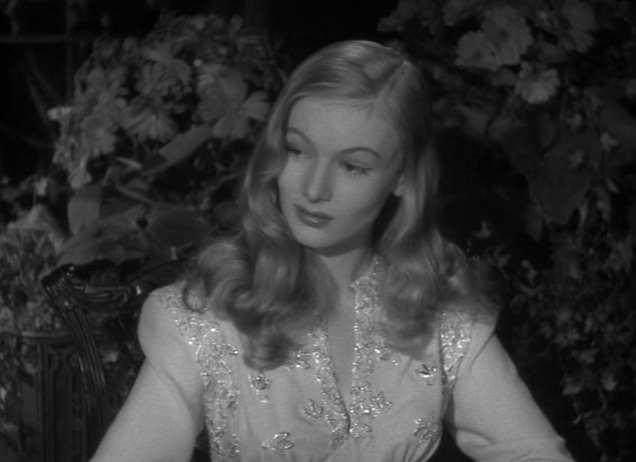
Janet Henry played by Veronica Lake: Janet is our femme fatale, she is dating Paul, but plans on dumping him as soon as her dad is elected governor. She seems to Like Ed, but can do nothing about it until after the election. She is smart and beautiful and knows how to use both attributes to get what she wants for her and her family.

Opal ‘Snip’ Madvig played by Bonita Granville: Opal is Paul’s little sister and is madly in love with Taylor. When Taylor ends up murdered, she believes her brother did it.

Taylor Henry played by Richard Denning: Taylor has a gambling problem and owes some bad men some money. He uses Opal to help her get some cash after his family has decided to not help him anymore. Taylor ends up murdered and finding out who did it is the driving force of this story.

Nick Varna played by Joseph Calleia: Varna owns a number of illegal gambling operations in the city. When Paul decides to crack down on crime in the city to help Henry get elected governor, Varna is his first victim. This happens even though Varna has been paying protection to Paul. “business is business and politics is politics.” Taylor Henry also owes Varna his gambling debts.

Jeff played by William Bendix: Jeff is Varna’s top muscle. He likes to beat people up, but he has a hard time keeping his mouth shut.

As most of my readers know I don’t like spoilers and don’t write any in my reviews. Hopefully this array of characters is enough to get you excited to see this film. Everybody is great in this, especially Ladd, Lake and Bendix. The story is very complicated but easy to follow. Hammett’s storytelling is some of the best ever.

It is interesting seeing this after watching Miller’s Crossing. Miller’s Crossing is loosely based on this book and Red Harvest by Hammett and you can see the similarities. This would make a great double feature seeing this version from 1942 and comparing it to the version from 1990. I loved both of these films and reviewed Miller’s Crossing earlier here:

https://everythingnoir.com/2015/02/15/re-watching-the-classics-a-fresh-look-at-millers-crossing/

This is also the second Ladd and Lake film I’ve seen, the other is The Blue Dahlia, which also starred Bendix as well. I really loved that film as well and reviewed it here:

https://everythingnoir.com/2015/03/07/review-the-blue-dahlia/

I really look forward to seeing more films with Alan Ladd and Veronica Lake soon and think they made a great pair.

This is a must see for any noir fan, especially those of Ladd, Lake, and Bendix. It is also a must see for fans of Hammett’s books and work.
Review: Journey Into Fear

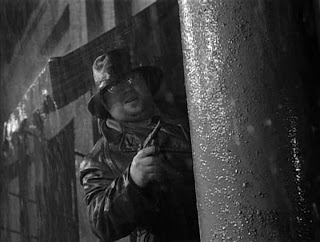
Journey Into Fear is a classic film noir from 1943 from Orson Welles. Welles didn’t direct this, Norman Foster did. Welles didn’t write the screenplay, he had the star of the film, Joseph Cotten do that. He does have a small role in this film, but isn’t on the screen that long. He doesn’t even have a producing credit for this film. So why do most consider this a Orson Welles film? Well, though he gave out the brunt of the work to others, he really did produce it, he also helped Cotten write the screenplay based on the book by Eric Ambler and he even re-shoot a new beginning and ending for the film. He just gave full credit to those he hired to do the job. This story follows ammunition engineer Howard Graham, played by Cotten, in Turkey on business during World War II. He meets with the Turkey business representative for his company and leaves his wife, played by Ruth Warrick at the hotel. Him and the business rep go down the street to a night club where we meet a dance couple played by Dolores del Rio and Jack Durant. Graham is also volunteered against his will to participate in a magic trick. Graham is strapped to a board as the magician gets into a box. The lights go out and a gun shot rings out in the crowd. The lights come on and the magician is strapped to the board with a gun shot wound and Graham emerges from the box. Graham knows right away that he was the intended target, as he and the rest of the club are sent to see Colonel Haki played by Welles to determine what really happened. Haki puts our hero on a boat that night to hide him from the German’s who are trying to kill him. We meet a whole other assortment of odd characters on the ship. Including the unhappy Matthews couple played by Frank Readick and the always good Agnes Moorehead. Our dancing couple is also on the ship and del Rio really takes a liking to our hero.  Graham soon realizes the Nazi’s have made their way aboard the ship as we get a claustrophobic feeling of impending doom. Will our hero get off the ship safely? Will he ever re-unite with his wife? One of my favorite performances of this film is the silent killer played by Jack Moss. He was a successful movie producer at the time and Welles wanted to use him as the killer in this film. He said he would do it if he didn’t have to speak. He didn’t and was as menacing as any killer in a 70’s slasher film. The opening scene, with a totally silent Jack Moss really grabs your attention and set the tone and mood for the rest of the film. It is a shame this is Moss’ only on-screen role. I would have loved to see him in more stuff. This film was not well received on its release. Welles even has said he was not happy with the film and he had a horrible performance as an actor in it. That being said it was an important early noir film in style and story. I actually really liked this film, even more than some of Welles’ other more regarded works. Favorite Tidbit: Though most everybody was not happy with this film, from the studio to Welles himself. The one person that was very happy with this film was the author of the book, Eric Ambler. He said the movie was so different from his book, that he could re-sell the rights to the book to a different studio and make some more money on it.
Review: Woman on the Run

As Eddie Muller said, this is the best film noir you have never seen. This film went into public domain making it easy to find and see, but the quality has been lost in the over copying. Muller himself was key in finding a few original prints and getting them edited together to make a restored version. He introduced this on the first night of TCM’s Summer of Darkness. This film was made in 1950 and directed by Norman Foster, who also helped with the screenplay, based on a story by Sylvia Tate.

This story is about an artist who witnesses a murder. It turns out the man murdered was a key witness in a case. The artist played by Ross Elliott is now the key witness and only person that can identify the murderer. He runs from the cops knowing his life is in danger. His wife played by our main star, Ann Sheridan is the police’s only lead in finding their new witness. She is crafty and out smarts the police at every turn, getting away from them in the hopes to find her husband before the police find him. Our couple has been married for four years and things are not going well. As the movie goes on she finds new things about her husband that makes her heart grow fonder of her husband. She also realizes her husband really does love her. Along the way she teams up with a journalist played by Dennis O’keefe to help find her husband. He is offering good money for an exclusive interview from her husband and seems to know the city of San Francisco. As our two are on their hunt for the missing witness we get to see a lot of this classic noir city. The hunt continues as our duo continue to try to lose the cops and beat them to her husband, but not everything is as it seems.

,

This film has a grand finale at a Carnival, something I have seen in two other noir films with the first and most famous one being The Lady from Shanghai. We also see an artist getting in over his head, this is also the third time I have seen this theme, with Scarlet Street being the first and best of this idea. Yes, I would put this movie behind these other two on my list of great film noir, but this film would be on the list. I have not seen a lot of films with Ann Sheridan before, but this movie has made me a fan and I will be looking to see more of her movies. If you are a fan of Sheridan or classic film noir, this is a must see. I did see the restored version and have not seen the public domain versions, but from the sound of things, it is worth seeking out the new restored version.

Favorite Tidbit:  Eddie Muller mentioned that he thought Ann Sheridan made a conscious decision not to be objectified in this film, as she was more known for her curves then her acting up to this point. She wore a big coat in almost every scene in this film to cover her body.

Review: Stranger on the Third Floor

Stranger on the Third Floor is a film Boris Ingster who sadly only directed three films. After seeing this film I would like to see more from him. This film is written by Frank Partos who has written many classics for the silver screen. This film’s biggest star is Peter Lorre, who made this film with only a few days left on his RKO contract. His role and presence doesn’t have much screen time, but he still got top billing for his appearance in this film.

So for many classic film noir historians, The Maltese Falcon is the first true film noir. This film actually came out the year before Falcon and as some have said, this is actually the first true film noir. As everything with noir, people have varying opinions. This film checks almost every box a film noir should as far as style and story. We have amazing cinematography with lots of shadows and low angles. We have a characters wrongly accused of crimes they did not commit and seemingly no way out. The story is intense with some of our characters having few allies to turn to. The ending isn’t exactly happy, well if it would have ended about 5 minutes earlier anyway. The story is told with flashbacks and has a crazy dream scene which uses a lot of noir techniques. You will get Claustrophobia feelings as our protagonist’s world comes down around him. The only fault I can see for this not being the first true film noir is we do not have a femme fatale of any sort. Personally I would say this is a film noir, so let the arguments for and against this begin.

If this film still doesn’t say classic film noir, I don’t know what does.

John McGuire plays a journalist who just got a raise and wants to marry his girlfriend played by Margaret Tallichet. Everything is going great for our couple. The reason he is getting his raise is he has written an article about a murder, which he happens to be the only witness to. The story goes into the court room where Elisha Cook Jr. is the accused murderer and everybody from the lawyers and judges, even the jury is phoning this one in. They find him guilty of the murder of the coffee shop owner and he goes to death row. Tallichet goes to court to watch her boyfriend in action. She feels that Cook Jr. could be innocent and McGuire’s testimony put him in prison. This gets McGuire thinking she maybe right. He goes home where he sees the stranger on the third floor played by Lorre. He chases Lorre out of the building, but feels there is something wrong in the apartment next door. The neighbor and McGuire have butted heads before and he realizes how easy it would be, to be framed for his murder. As our story continues we ask questions like, Could the neighbor really be murdered? Will he be framed for it? Is Cook Jr. innocent after all?

This film is very good and worth watching whether you think it is a film noir or not. That just makes the conversations about this film more interesting. Our four big stars are all great in this, with Lorre and Cook Jr. at their creepiest best. I also found Tallichet a very gifted actress, it is a shame she retired from the business so early in her career. If you love classic film, noir or not, you will like this film.

Review: I Was a Communist for the F.B.I.

I Was a Communist for the F.B.I. is a film noir from 1951. This story is based on Matt Cvetic who was an undercover informant for the F.B.I.. Gordon Douglas directs this movie in a docudrama format. I am not a big fan of the docudrama format for noir and still have not seen one that I love.

Frank Lovejoy plays Cvetic in this film with Dorothy Hart playing a teacher and member of the Communist Party.  Cvetic is undercover in Pittsburgh where the Communist Party is trying to disrupt manufacturing. He is suspicious of everybody as he doesn’t always know who is with him and who is against him. This does show him in his family life where his son has a hard time defending him at school and his brother fights with him constantly because he thinks he is a Communist. This part of the story felt pretty real to me. On the other hand, the members of the Communist Party who are portrayed in this film seem to over the top. They are very racist, having issue with Jews as well as Blacks. They seem more like the mob, as they don’t care who gets hurt and use a lot of violence to get their message across. This film is obviously a propaganda film for Anti-Communism and though it maybe based on a true story they definitely made sure the members of the Communist Party had absolutely no redeeming qualities in this film. This film is short and to the point. If we ignore the politics of this film it is a decent noir with some great suspenseful moments. On the other hand it is fun to look at the politics of this film as a time capsule to see just how paranoid of the communist movement America was in the 1950’s, maybe all the way through the 1980’s for that matter.

This is an interesting film. I would not say it is a great film by no means, but can be viewed in a number of different and entertaining ways. It has a different feel to it then most classic film noir, and though our main character is on the verge of being found out at every turn, it isn’t as gritty as most. This is worth viewing for film noir buffs, but if you are new to the genre, I would recommend starting somewhere else. I would also like to hear from you political historians out there and what you felt about the film in that context.

Favorite Tidbit:  Though the Communist Party was fairly large at one time, with reports of up to 200,000 members, by the mid 1950’s the number of members was under 10,000 and 1500 of those where undercover F.B.I. informants.

Review: Crime of Passion

Crime of Passion is a film noir from 1957 with 3 of noir’s greatest.  We Have Barbara Stanwyck, Sterling Hayden and Raymond Burr in a love triangle that can not end well. Gerd Oswald directs this film, written by Jo Eisinger.

This story starts out with Stanwyck working at a paper as an advice columnist for a San Francisco paper. She gets put on a story against her will where she meets a couple Los Angeles cops who fly up about the case. One of the cops is Hayden and Stanwyck falls in love in short time. She soon moves down to Los Angeles and marries Hayden. She has problems getting along with the other cop’s wives and doesn’t handle the stress of being a cop’s wife herself. We soon learn that Hayden’s boss is Burr and an old flame of Stanwyck’s. Burr is also married, his wife is played by none other than Fay Wray. Wray is very sick and this is hard on Burr. Soon Burr and Stanwyck start seeing each other again. This love triangle does not end well and our story really heats up.

This film is short and starts out quit slow, but it heats up in the last half hour. The film plays as a bit of a psychological thriller and Stanwyck is getting the ball rolling on the psychotic femme fatale that we would see in future films like Fatal Attraction.

Hayden is very good playing his every man’s man, as he always does. Burr is real good playing somebody with a lot of power and is very strong, but when he lets his guard down and shows some weakness it is very believable. Stanwyck is good as always and you could watch this again just to get all the little nuances of her performance. Wray plays a smaller part, but does a good job with it.

This is a good film and well worth watching. Just give it some time to get started as the first half of the film is a little dull and slow. It quickly builds to an interesting noir by the end.